The Method
A turnaround system built for the real world.
STO gives you more than just inspiration, we give you the mechanics. How the system actually works, step by step. This page is exactly that: a clear, practical explanation of the STO Management Method, blending proven refinery turnaround discipline with a modern, adaptive execution model.
This isn't theory.
It is the structure behind shutdowns that run faster, cleaner, and with fewer surprises.
The Timeline
- Start: 18-32 months before the shutdown Duration: 12-18 monthsInitialization In this phase we develop and align on the overall turnaround concept. Key elements: turnaround governance system, milestone list, initial resource plan for the shutdown.
- Start: 6-18 months before the shutdown Duration: 6-18 monthsPlanning In this phase we define and refine the turnaround goals and plan the actions required to achieve them. Key elements: scope freeze, investment project schedules, unit-level schedules, T-sessions, quality control plans.
- Execution In this phase the plan is put into action and the shutdown is executed. We continue to employ several tools and strategies to ensure the shutdown meets targets. Key elements: shutdown plan, startup plan, handover-to-maintenance schedule, daily operational meetings, etc.
- Monitoring and Control The key to a successfull execution phase is maintaining proactive monitoring and control mechanisms. Therefore, we place extra emphasis on this, in parallel with the execution stage. Key elements: tracking and reporting.
- Completion Through STO's method, we help you complete the project within scope, but our work doesn't stop here. We perform a thorough evaluation of the entire process to facilitate smooth turnarounds in the future. Key elements: lessons learned meeting, contractor evaluations, defect lists for the next turnaround.
Phase 1: Initialization
Where chaos is eliminated before it ever appears.
According to industry leaders, the path to a successful TAR (turnaround) begins 18-32 months before day 1, not six weeks before shutdown.
This phase establishes the governance architecture - the backbone of the entire turnaround.
What we install at this stage:
- Gatekeeper - sets business justification, approves goals and boundaries.
- Single Point of Accountability (SPA) - translates goals into scope and strategy.
- Turnaround Manager - owns planning and execution end-to-end.
- Cross-functional Steering Council - aligns Maintenance, Operations, Projects, HSE, Supply, Engineering.
- Unit Working Groups - convert strategy into actionable unit-level tasks.
Responsibilities and key Tools
This phase is crucial in preventing: unclear objectives, scope creep by committee, last-minute "urgent additions", and silo conflicts between Operations, Maintenance, and Projects. To accomplish this, we aim for the following key deliverables: turnaround objectives & constraints, high-level milestone map, preliminary resource plan, initial risk register, and a documented operating model for the entire TAR lifecycle
Phase 2: Scope Definition & Freeze
Cutting Out the Noise.
Most shutdowns run long because the scope wasn’t truly controlled.
Our method uses a structured, evidence-based funnel instead of emotional decision-making.
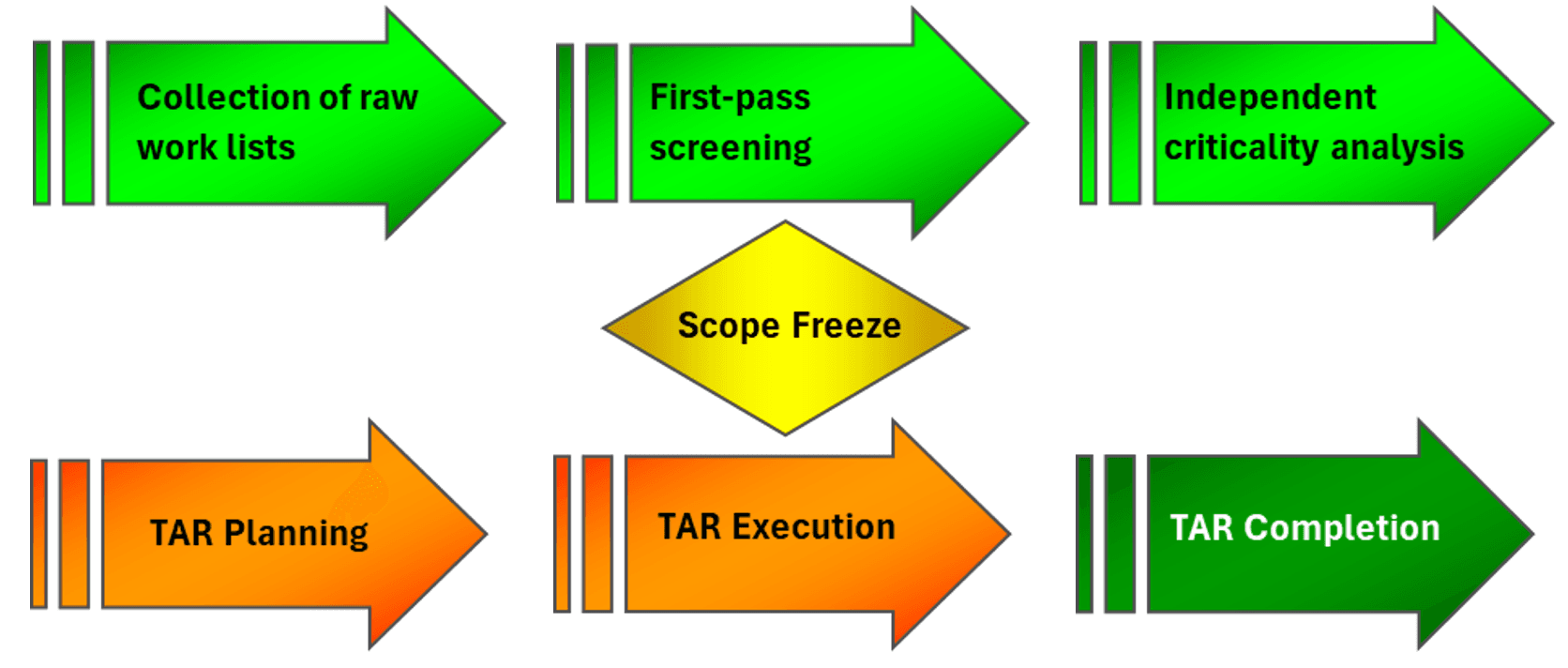
How scope is built:
- Collection of raw work lists
- First-pass screening
- Independent criticality analysis (mandatory / preventive / opportunistic)
- Risk-of-not-doing assessment
- Identification of work that can be done before or after the TAR
- Full justification of every remaining item
What this achieves:
- 20–40% reduction in shutdown duration
- Lower cost without sacrificing reliability
- A scope that reflects asset risks, not personal preferences
- A mechanism to approve or reject late additions based on clear criteria
Final Output:
A frozen, defendable, and risk-balanced scope with a formal process for approving any exceptions.
Phase 3: Detailed Planning
Turning Preparation Into Architecture
This is where the method becomes unmistakably different from traditional “good intentions” planning.
Core Components
3.1 Integrated Schedule (“Oil-out to Oil-in”)
- Shutdown plan
- Execution plan
- Startup readiness
- Integration of investment projects and equipment replacements
3.2 Logical Work Structure
Breaking the unit into manageable blocks by:
- Equipment type
- Physical location
- Operational zones
- Utility dependencies
This creates clarity in responsibilities and eliminates overlap.
3.3 T-Sessions (TMP/TMPTM)
Workshops that challenge every duration, step, and assumption to uncover:
- Theoretical maximum performance
- Compression opportunities
- Parallelization options
- Improved sequences
3.4 Quality Control Architecture
- Inspection checkpoints
- Weld/NDT protocols
- Pressure test sequencing
- Acceptance criteria
3.5 Logistics & Infrastructure Planning
Everything that usually breaks a shutdown:
- traffic flows
- crane layouts
- material staging
- contractor facilities
- waste routes
A fully engineered turnaround where each hour, each resource, and each interface is accounted for. No guesswork.
No “we’ll figure it out onsite.”
Phase 4: Execution
A Daily Machine, Not Daily Firefighting
When planning is done right, execution becomes predictable. But the method adds a second layer: daily operational discipline.
Execution practices
- Structured daily leadership meetings
- Critical-path protection routines
- Field-verified progress (not office-only reporting)
- On-the-spot decision loops
- Contractor performance monitoring
Startup Readiness
Before the unit is handed back, the system performs a full Pre-Start-Up Safety and Integrity Review:
- completion of all QC checks
- updated P&IDs
- commissioning documentation
Why this matters
Execution becomes:
- stable
- transparent
- interruption-resistant
- faster than legacy TAR processes
And the project team finally stops firefighting and starts managing.
Phase 5: Completion & Learning
Turning One Success Into the Next
A TAR is only truly successful if the lessons carry forward.
The method enforces:
- structured Lessons Learned workshops
- formal contractor performance evaluation
- updated defect lists for the next shutdown
- documentation and archiving according to standards
Why it matters
This phase creates compounding improvement.
The next shutdown is always better than the last — faster, safer, cheaper, cleaner.
Summary
What Makes the Method Different
It’s not software.
It’s not templates.
It’s not slogans about “discipline” and “excellence.”
It’s a complete operating system for shutdowns, built on five pillars:
- Strong governance
- Defendable scope
- Engineered preparation
- Daily execution discipline
- Continuous improvement
This is how we help plants cut turnaround durations by up to 30% without cutting corners.